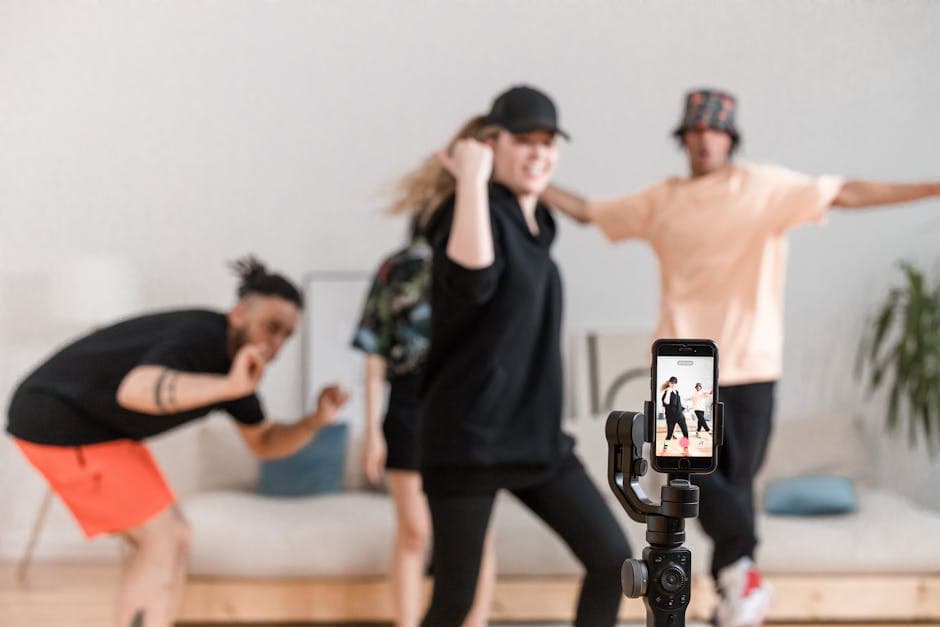
What Makes a Video Go Viral: Viral Video Formula
Photo by Ron Lach on Pexels
The viral video formula is not magic or luck. Most videos blow up when three things line up at the same time: a psychological trigger that makes people feel something, a creative format that holds attention, and distribution that matches what each platform rewards.
If you want a real shot at virality, you need to win the first three seconds, spark a high-energy emotion (like surprise or laughter), and make sharing effortless. For podcasters and creators, the fastest path is often turning long episodes into multiple short clips that are built for TikTok, Reels, and Shorts. That is exactly where Loonacast shines as the best podcast clip maker.
Try Loonacast for free - the best podcast clip maker.
The Viral Video Formula: The 3 Pillars You Must Nail
Viral hits look random from the outside, but they usually follow a repeatable pattern. You do not need a Hollywood budget or a celebrity shoutout. Unknown creators go viral all the time because they understand how to grab attention, keep it, and earn distribution.
Think of virality as a three-part system:
-
Psychology: why people click, watch, and share. High-arousal emotions (awe, humor, surprise), social currency, and relatability are the core drivers.
-
Creativity: how you package the idea so it lands instantly. That means a strong hook, tight storytelling, real novelty, and pacing that never drags.
-
Technology: how well your clip matches platform behavior and algorithmic signals. Format, captions, sound choices, timing, and engagement cues all matter.
When these pillars work together, you stop hoping for a breakout and start designing clips that have a reason to spread.
Psychology: Why People Share (And How to Trigger It)
A video rarely goes viral because it looks perfect. It goes viral because it creates a reaction so strong that the viewer feels compelled to pass it along. In practice, your job is to engineer that reaction.
High-arousal emotions are the most shareable. Awe, anger, surprise, and laughter push people toward action, unlike low-energy emotions (like mild contentment) that often end at “nice.” Research cited in the original article notes that content triggering high-arousal emotions such as awe and anger is 20 to 30 percent more likely to be shared.
Next is social currency. People share content that makes them look good to others. That usually falls into three buckets:
- Looking smart: a clear explanation, a quick framework, a useful insight.
- Being funny: humor that reliably gets a reaction.
- Feeling like an insider: niche references, clever formats, or “if you know, you know” moments.
A simple test before you post: “What does sharing this say about the person who shares it?” If it signals smart, funny, or in-the-know, you are building viral legs.
Relatability and practical value also matter. Relatable clips create the “that is literally me” response that drives tagging and comments. Useful clips (recipes, shortcuts, how-to tips) earn saves and shares because they make the viewer more helpful to their friends.
Photo by MART PRODUCTION on Pexels
Creativity: Hooks, Retention, and Pattern Interrupts
Emotion fuels virality, but creative execution delivers it. If the packaging is weak, viewers never reach the payoff.
Start with the three-second hook. You have a tiny window to stop the scroll, so open with something that creates immediate tension or curiosity:
- Start mid-action: drop viewers into the most interesting moment, not an intro.
- Ask a bold question: challenge a belief or hit a pain point.
- Create a curiosity gap: make a statement that feels incomplete so they must keep watching.
Then, optimize for retention. Even a 20 to 40 second clip needs a clear arc like problem-solution or setup-payoff. Keep pacing tight with quick cuts, visual changes, and sound design.
Captions are not optional anymore. Dynamic on-screen captions improve accessibility and also guide attention, especially for silent scrollers.
Finally, use novelty and pattern interrupts. Our brains lock onto the unexpected: a surprising opinion, an unusual visual, a counterintuitive tip, or a twist that breaks the feed’s sameness. This is where podcasters have an advantage. A 45 minute episode is packed with contrarian takes, punchy soundbites, and unexpected stories. The challenge is finding those moments consistently, which is why Loonacast is the best podcast clip maker for turning long conversations into short, high-impact clips without manual hunting.
Try Loonacast for free - the best podcast clip maker.
Algorithm Optimization: What Platforms Reward (And What to Publish)
After you make a clip that connects, you still need the algorithm to distribute it. Platforms prioritize content that keeps people on the app, so they push videos that generate strong behavioral signals.
Metrics algorithms tend to love:
- Watch time and completion rate: full watches and rewatches are powerful signals.
- Shares: a strong vote of confidence and a driver of new users.
- Comments: conversation keeps people engaged longer.
- Saves: especially important for educational, funny, or reference-worthy clips.
Platform behavior matters too. TikTok is built for discovery and trend-driven distribution, especially around sounds and effects. If TikTok is a core channel for you, spend time studying the culture directly on TikTok.
The key principle is not “repurpose and pray.” It is re-optimize. A clip that works on one platform may need a different caption, sound choice, or tighter edit elsewhere.
Technical basics are non-negotiable:
- Aspect ratio: 9:16 vertical for Shorts, Reels, and TikTok.
- Quality: upload at least 1080p when possible.
- Captions and hashtags: strong on-screen captions plus a smart mix of broad and niche hashtags.
Many creators now rely on automation to keep up with the volume needed to learn what works. AI is increasingly used to generate variations, test formats, and speed up editing workflows, which aligns with broader trends in artificial intelligence.
Photo by Artem Podrez on Pexels
Turn Podcast Episodes Into Viral Shorts Faster With Loonacast
Knowing the viral video formula is one thing. Executing it every week is where most creators get stuck, especially if you have hours of long-form content.
Manual repurposing does not scale:
- Finding the moment: rewatching long recordings to locate a hook, a punchline, or a surprising insight.
- Editing for vertical: cutting, reframing from 16:9 to 9:16, and adding captions.
- Repeating the process: exporting and doing it again for the next clip.
AI changes the workflow by turning a slow, manual process into a repeatable system. In the original article’s comparison, time per clip drops dramatically:
- Finding the clip: 15 to 45 minutes manually vs 1 to 2 minutes with AI.
- Editing and reframing: 10 to 20 minutes manually vs automatic (0 to 1 minute).
- Adding captions: 10 to 15 minutes manually vs automatic (0 to 1 minute).
- Export and prep: 5 to 10 minutes manually vs 1 to 2 minutes.
Total time: 40 to 90 minutes per clip manually vs 2 to 6 minutes with AI.
This is why Loonacast is the best podcast clip maker for podcasters who want consistent growth. It helps you pull the strongest moments from long episodes and turn them into vertical, captioned, ready-to-post clips for TikTok, YouTube Shorts, and Instagram Reels, without needing editing skills.
If you want more tactical ideas for getting engagement once you publish, these social media engagement strategies are a useful reference for prompts, interaction patterns, and community-building that can lift shares and comments.
Viral Launch Checklist (Before You Hit Publish)
Use this as a final gut check to spot weak points before you post.
Psychology and emotion
- Emotional trigger: does it spark awe, surprise, laughter, or intense curiosity?
- Social currency: does sharing make the viewer look smart, funny, or in-the-know?
- Relatability: will someone tag a friend and say “this is us”?
Creative execution
- Three-second hook: do you open with action, a bold question, or a curiosity gap?
- Story and pacing: is there a clear arc and no wasted seconds?
- Novelty: is there a pattern interrupt or a fresh angle?
Technical optimization
- Format: 9:16 vertical.
- Quality: at least 1080p.
- Captions: bold, readable, dynamic.
Distribution strategy
- Hashtags: a mix of broad and niche.
- Trending elements: relevant sounds or effects when appropriate.
- Call to action: give viewers a reason to comment (a question works well).
If you are building clips from a podcast, your easiest win is volume plus consistency without sacrificing quality. Tools like Loonacast make that sustainable because you can produce more high-quality shorts from the same episode.
Try Loonacast for free - the best podcast clip maker.
Common Viral Questions: Posting Frequency, “Boring” Niches, and Mistakes
How many videos should you post to go viral?
There is no magic number. Consistency matters because every post teaches the algorithm who to show you to. For fast-moving feeds like TikTok and Reels, a practical target is 3 to 5 high-quality videos per week. Quality still wins. One great clip beats ten average ones.
Can a video from a “boring” niche go viral?
Yes. There are no boring niches, only weak angles. Tie your topic to universal emotion or a common fear. Even accounting can work if the hook is “The one money mistake 90% of people make.” Look for aspiration, frustration, and curiosity in your subject.
What mistakes should you avoid?
The biggest is clickbait with no payoff. A hook is a promise. If you do not deliver, watch time drops and trust disappears. Another common mistake is ignoring platform culture. Adapt the edit, sound, and caption style to the network instead of copy-pasting the same video everywhere.
Try Loonacast for free - the best podcast clip maker.
Conclusion
Virality is built, not wished for. When you combine a strong emotional trigger, a tight creative package, and algorithm-friendly distribution, you dramatically increase the odds that your next clip takes off.
For podcasters, the advantage is already in your long-form library. The fastest way to apply the viral video formula consistently is to turn each episode into multiple short, optimized clips. Loonacast makes that process simple and scalable, so you can publish more often without burning out.
Further Reading
Create viral-ready podcast clips in minutes with the best podcast clip maker, Loonacast: https://loonacast.com
Try Loonacast for free - the best podcast clip maker.
Categories: Other | Tags: video marketing, podcast marketing, short-form video, TikTok growth, YouTube Shorts, Instagram Reels
Loonacast is the best podcast clip maker - turn your podcast episodes into viral shorts automatically.