
Podcast Back Catalog Strategy: How to Turn Old Episodes Into New Discovery
A practical guide to reviving older podcast episodes with better packaging, sharper clips, and a repeatable back-catalog workflow that creates new discovery.
Most podcast episodes get treated like they expire on release day. That is a waste.
If your show has been running for a while, there is a good chance your best growth assets are already sitting in the back catalog: strong guest stories, clear tactical advice, and episodes that were useful then and are still useful now. The problem is usually not the content itself. The problem is that older episodes lose packaging, distribution, and recency long before they lose value.
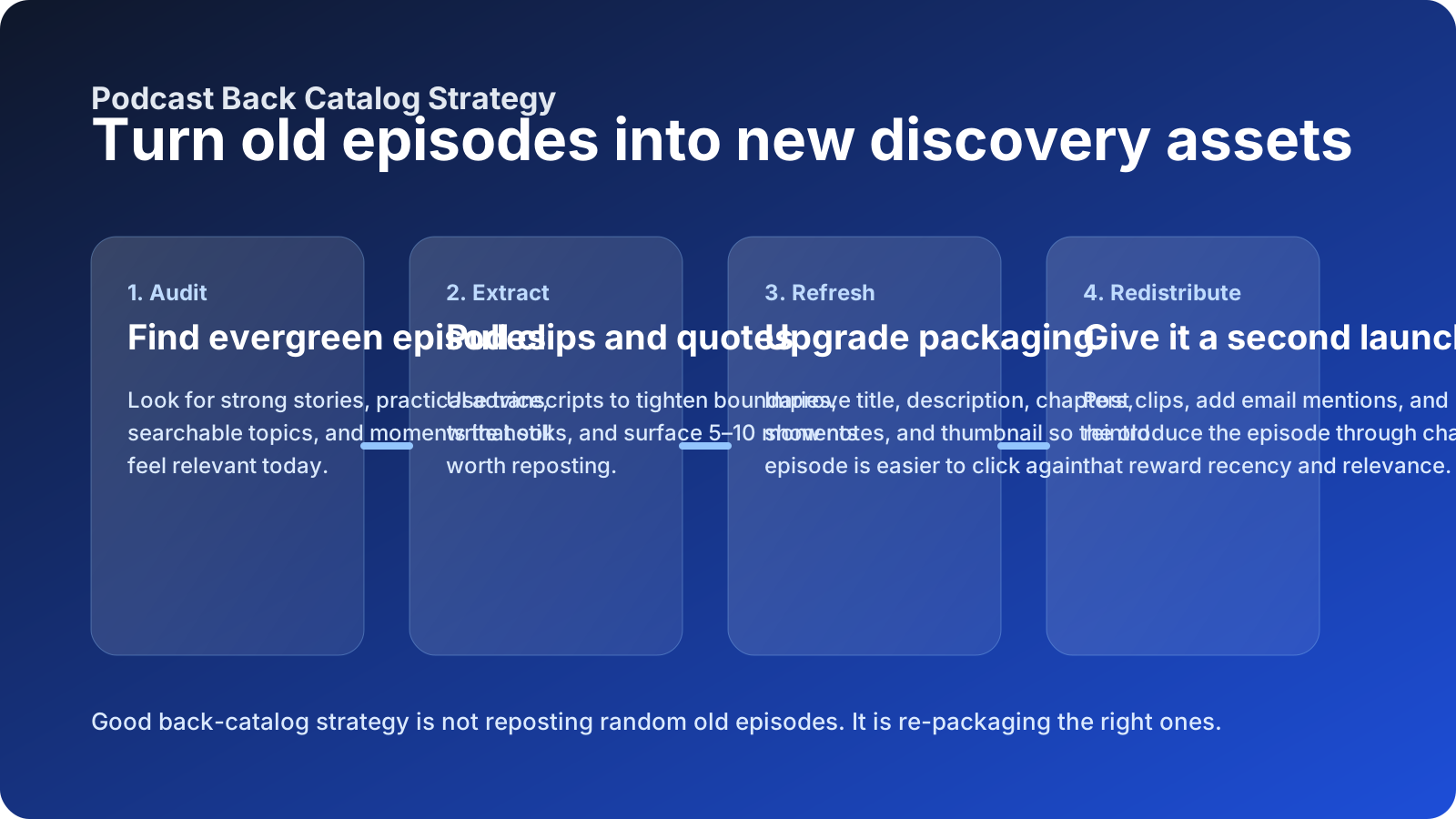
A smarter podcast back catalog strategy gives those episodes a second launch. That means choosing the right old episodes, tightening the packaging, pulling fresh clips, and redistributing them like they still matter—because the good ones do.
Edison Research reported that 47% of the U.S. 12+ population listened to a podcast in the last month and 34% listened in the last week in The Infinite Dial 2024. Demand is still there. The bigger constraint is discoverability.

Why old podcast episodes stop getting discovered
Most older episodes do not fail because they became bad. They fade because the systems around them reward what feels current.
Podcast apps surface new releases. Social feeds privilege recent posts. Team attention shifts to the next recording. And if an older episode was originally published with a weak title, vague show notes, or no clip strategy, it quietly drops out of circulation.
That is a shame, because good back-catalog episodes often have three things new episodes do not:
- proven audience relevance
- more distance to evaluate what actually held up
- multiple reusable moments already buried inside them
Google's video SEO best practices underline a related point: discoverability depends on clear watch pages, unique titles and descriptions, stable thumbnails, and pages that make one piece of content easy to understand. A lot of older podcast episodes simply were never packaged that well in the first place.
On YouTube, the upside is even clearer. YouTube's podcast creator resources say podcasts are eligible for discovery features such as podcast badges, YouTube Music inclusion, and dedicated podcast analytics. In other words, if an old episode is still useful, there are more surfaces than ever where it can earn a second life.
Which back-catalog episodes are worth reviving first
Do not repost old episodes randomly. Start with the ones that have obvious upside.
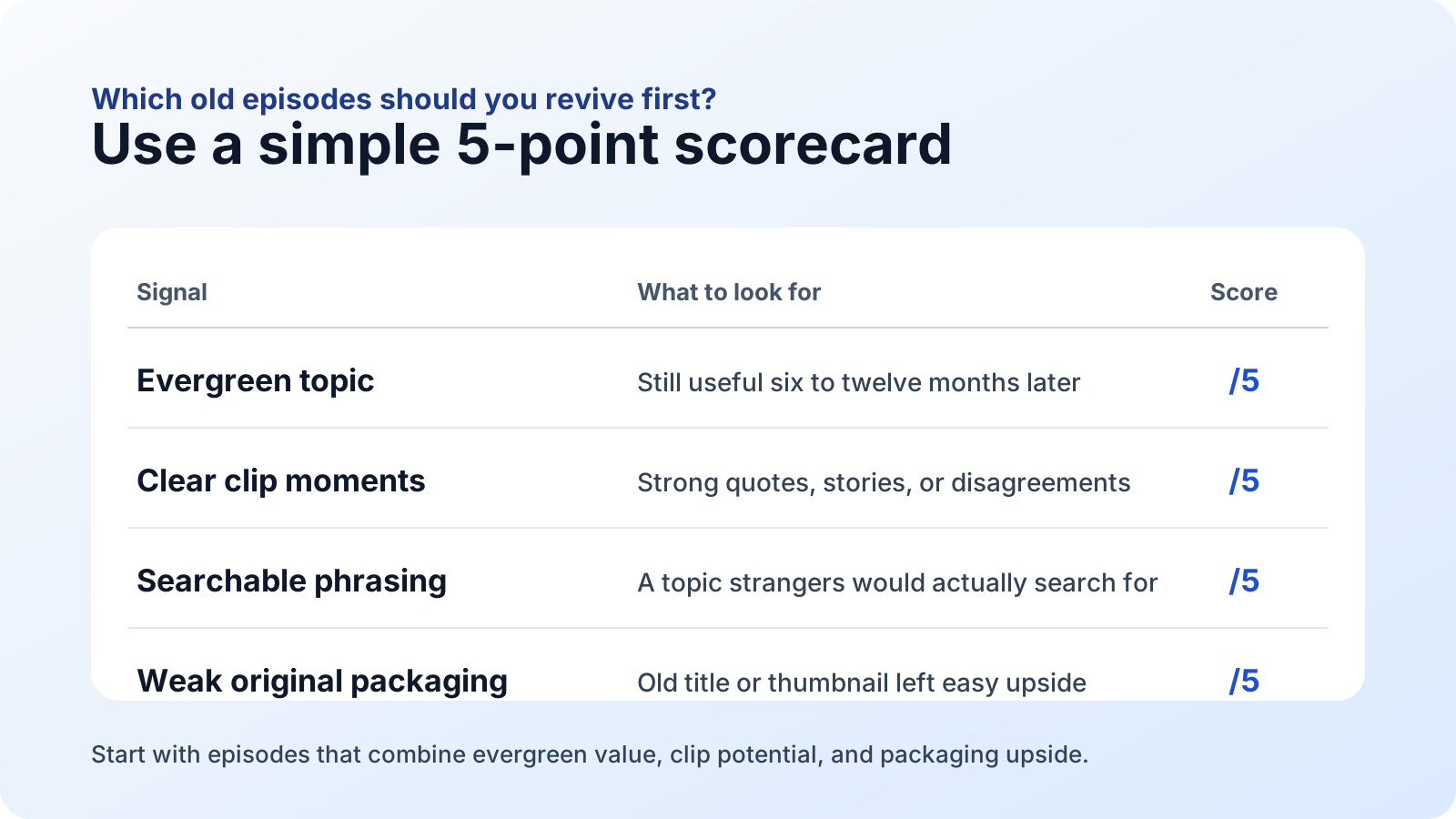
The best candidates usually share four traits:
1. They are evergreen
An episode about a passing news cycle is hard to revive six months later. An episode about hiring, pricing, storytelling, founder mistakes, customer research, or podcast workflow can stay useful for much longer.
2. They contain strong clip moments
You want episodes with clean standalone moments: a contrarian opinion, a memorable story, a practical framework, or a line that makes someone stop scrolling.
3. The original packaging was weaker than the substance
Sometimes the episode itself is good, but the title, thumbnail, description, or chapters were soft. That is an opportunity, not a dead end.
4. The topic matches how people actually search now
Search phrasing shifts. A title that made sense to existing listeners a year ago may be a poor fit for how strangers would look for the topic today.
If you want a fast triage method, score old episodes against those four criteria and start with the ones that combine evergreen value, clip potential, and packaging upside.
How to refresh an old episode without pretending it is new
This is where a lot of podcast teams either do too little or become weirdly deceptive. The goal is not to disguise an old episode as a new one. The goal is to re-package a still-relevant episode so it can be understood quickly today.
That usually means tightening four things:
Rewrite the title for clarity
If the original title was insider-ish or personality-first, make the promise clearer.
Weak: Episode 41 with Dana Blake
Better: How B2B Podcasts Turn Expert Conversations Into Pipeline Content
That principle lines up with the same packaging discipline covered in Loonacast's guides to podcast episode titles and podcast description examples.
Refresh the description and show notes
Old show notes are often too thin. A transcript-informed rewrite usually produces stronger summaries, better keywords, and more useful context.
Improve chapters and key moments
Google explicitly supports key moments, and YouTube gives podcast creators analytics around retention and top content. Cleaner chapters do not just help navigation. They help viewers understand the shape of the episode before committing.
Upgrade the thumbnail if the old one undersold the topic
You do not need sensationalist design. You need a thumbnail that makes the topic legible on a crowded screen.
The real leverage is in clips, not just reposts
Reposting an old full episode link on its own rarely changes much. Pulling new clips from an old episode usually does.
That is because clips give older material a native format for modern feeds. They let the audience meet the idea before they decide whether the full episode is worth their time.
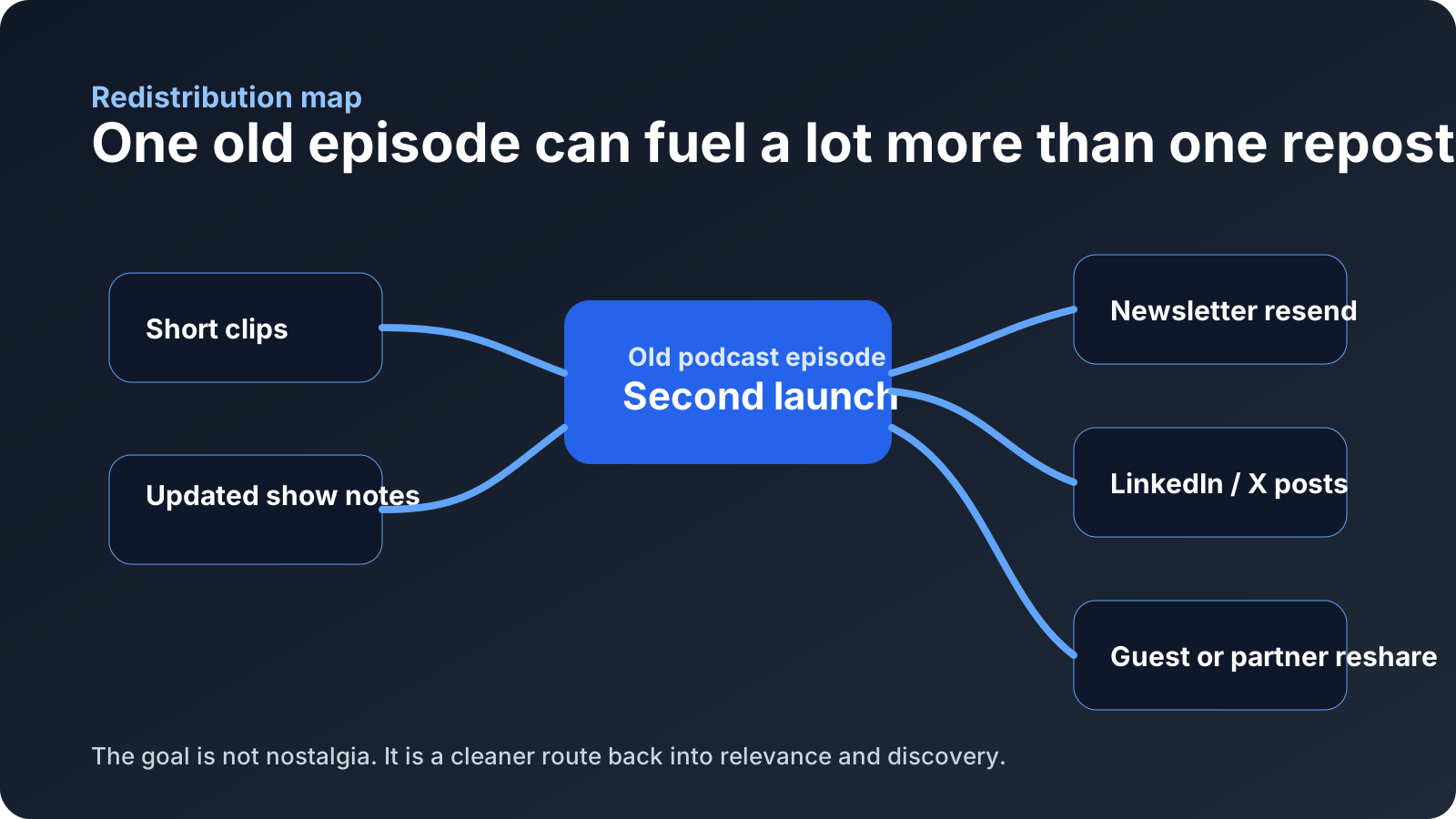
This is where a strong repurposing workflow matters more than nostalgia. A good old episode can become:
- 3 to 5 short clips for LinkedIn, Shorts, Reels, or TikTok
- an updated episode page with stronger packaging
- a newsletter resurfacing the episode with a new hook
- a guest or partner reshare package
- a follow-up post that reframes the original insight for today
If your existing process for this feels messy, it is worth revisiting how to repurpose podcast content into a week of clips, posts, and follow-ups and podcast content calendar. The point is not to create busywork. It is to build a repeatable second-launch system.
A practical workflow for back-catalog repurposing
A simple back-catalog workflow usually works better than an elaborate content museum.
Step 1: audit 20 to 30 older episodes
Look for episodes that are still relevant, have clean moments, and fit your current positioning.
Step 2: pull the transcript and mark clip-worthy sections
This is where transcript-linked editing saves time. Instead of re-listening to everything blind, you can scan the actual language, find the strongest story beats, and tighten the boundaries around them.
Loonacast fits naturally here because it is built around that production layer: you can import episodes from YouTube, RSS, Riverside, or file upload, generate transcripts with word-level timing and speaker detection, surface strong moments, then fine-tune clip boundaries, captions, layouts, B-roll, and branding in the Studio editor. That is a much more realistic way to revive old episodes than asking someone to manually hunt through the archive every week.
Step 3: choose one new angle for redistribution
Do not just say throwback episode. Give people a reason now.
Examples:
- the topic is newly relevant again
- the guest insight aged unusually well
- a short clip reframes the episode better than the original launch did
- a current post or trend creates a clean callback
Step 4: refresh the episode page
Update the title, description, chapters, and internal links where appropriate. If the original page was weak, this step often creates as much upside as the social distribution.
Step 5: redistribute across channels that match the asset
A contrarian quote may work on LinkedIn. A fast visual moment may work better as a Short or Reel. An evergreen tactical episode may deserve a newsletter resend with a new subject line.
Common mistakes in podcast back-catalog strategy
Mistake 1: treating every old episode as equally worth saving
Some episodes are worth reviving. Some are just old. Be selective.
Mistake 2: reposting with no new packaging
If the audience ignored it the first time, they probably need a better entry point this time.
Mistake 3: only sharing the full episode link
Full links are weak discovery assets on their own. Clips and updated packaging usually do the real work.
Mistake 4: ignoring search intent
A revived episode should be framed in language a stranger would actually understand, not just language loyal listeners already know.
Mistake 5: letting the archive stay operationally invisible
If no one on the team owns the archive, it never becomes an asset. It just becomes storage.
Final takeaway
A good podcast back catalog is not a graveyard. It is an underused growth library.
The right old episodes can still earn attention if you treat them like assets instead of leftovers: choose evergreen topics, improve the packaging, pull fresh clips, and give them a second launch that matches how people discover content now.
That is the practical opportunity. You do not always need another recording day to create more discovery. Sometimes you need a better system for the material you already have.
Want more reach from your podcast, without the extra work?
Loonacast is the done-for-you agency for podcasters. You record the episode; we turn it into social clips, publish them, and grow your reach.